
History of Moldavite Crystal and Why Its Bracelets Are So Special

A moldavite crystal bracelet is more than a piece of green jewelry. Every genuine Moldavite bead comes from a natural impact glass with a remarkable geological history that began millions of years ago. The history of moldavite crystal is connected to a massive meteorite impact near what is now the Ries crater in southern Germany. The impact melted material from Earth's surface and sent molten droplets into the atmosphere. Those droplets cooled into natural glass and eventually became the Moldavite specimens collectors know today.
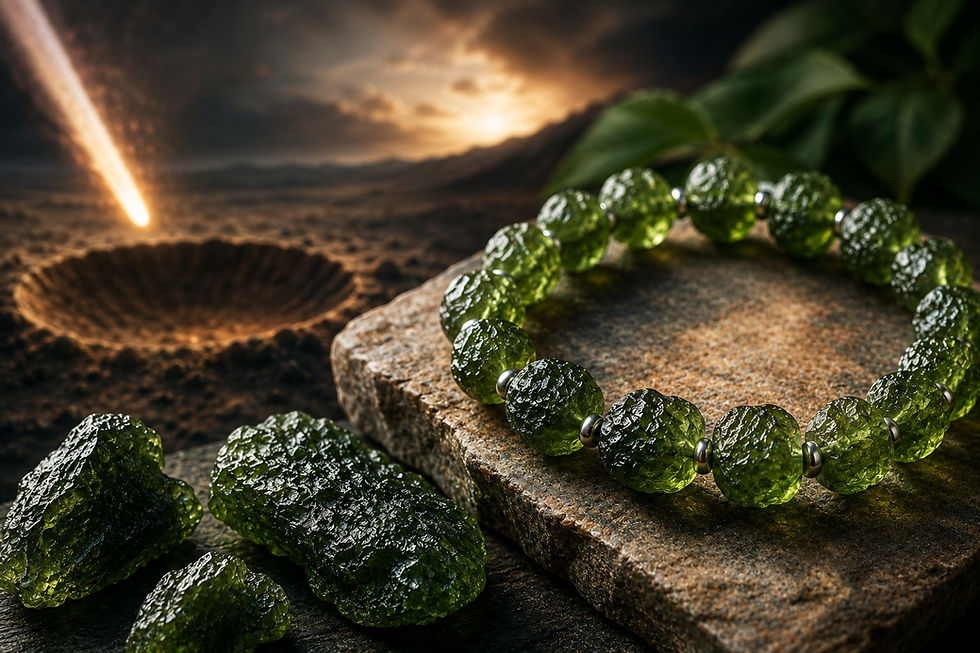
Today, Moldavite is used in collector specimens, pendants, rings, and bracelets. But what makes a moldavite crystal bracelet special is not simply its green color. Its natural origin, unusual texture, Czech provenance, and limited availability all contribute to its appeal.
This guide explores the history of moldavite crystal, how Moldavite became jewelry, and what buyers should know before choosing a genuine bracelet.
What Is Moldavite?
Moldavite is a natural tektite, which means it is a type of natural glass created during a major meteorite impact.
The material formed when the Ries impact generated extreme heat and pressure. Molten terrestrial material was thrown into the atmosphere, where it cooled rapidly before falling across Central Europe.
Unlike ordinary manufactured glass, Moldavite has a geological story behind every specimen.
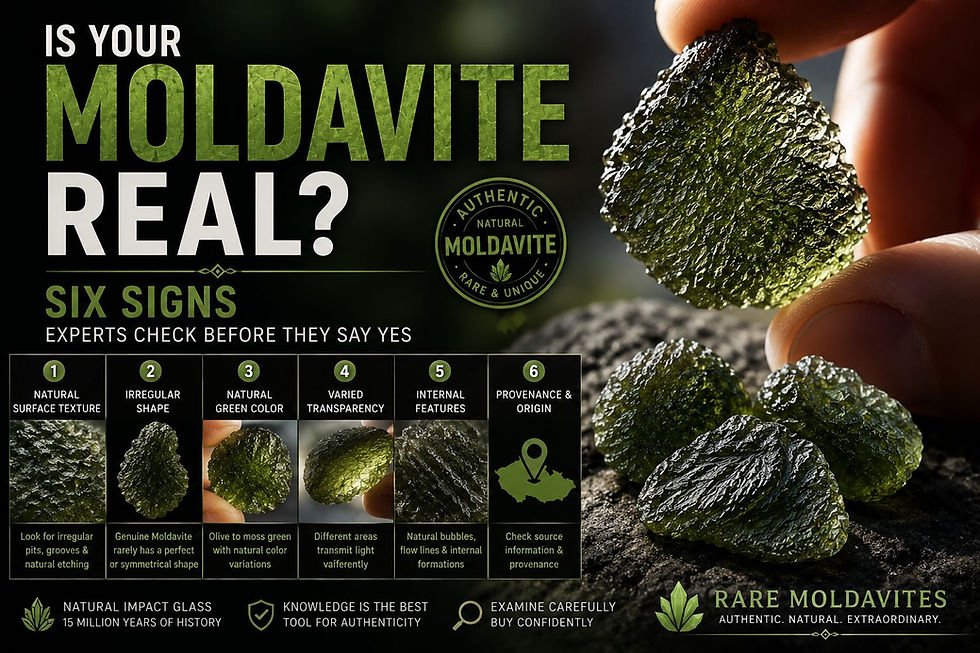
Natural Moldavite commonly has:
Olive to deep green coloration
Irregular shapes
Etched or sculpted surfaces
Natural pits and grooves
Internal flow structures
Variable transparency
These characteristics are part of what makes Moldavite attractive to collectors and jewelry enthusiasts.
The History of Moldavite Crystal Begins With a Meteorite Impact
The history of moldavite crystal begins approximately 15 million years ago.
A large impact occurred in the region of present-day Bavaria, Germany. The resulting Ries crater measures roughly 24 kilometers across. The impact generated enough energy to melt and eject surface material.
Some of that molten material traveled through the atmosphere before cooling into glass.
The resulting tektites were distributed across a large area of Central Europe. Many of the best-known specimens were later discovered in areas of the Czech Republic.
This explains an interesting point about Moldavite: the impact origin and the modern collection location are not the same thing.
The meteorite impact happened in Germany, while most collectible Moldavite is associated with Czech localities.
That geological connection gives a Moldavite bracelet a story that ordinary glass jewelry cannot reproduce.
Where Is Moldavite Found?
Most collectible Moldavite comes from the Czech Republic.
South Bohemia is particularly well known for Moldavite occurrences. Localities such as Besednice and other areas around the South Bohemian Region are recognized among collectors.
Moldavite also occurs in parts of South Moravia.
The locality can influence collector interest because different areas can produce specimens with different shapes, colors, textures, and surface characteristics.
For someone buying a moldavite crystal bracelet, locality information can therefore be useful. A reputable seller should be able to explain the claimed Czech origin of the material rather than simply describing the bracelet as "green crystal."
Why Are Moldavite Crystal Bracelets So Special?
A moldavite crystal bracelet combines natural geological history with wearable jewelry.
Instead of keeping a Moldavite specimen inside a display case, a bracelet allows the wearer to carry small pieces of natural impact glass as part of everyday jewelry.
The appeal comes from several factors.
Natural Origin
Each genuine Moldavite formed through a rare geological event. The material was not manufactured as jewelry.
Distinctive Appearance
Moldavite often has an olive-green or forest-green appearance. Its natural surface can contain tiny ridges, pits, and irregular features.
Collector Interest
Collectors value Moldavite because of its connection to meteorite impact geology and Czech localities.
Individual Character
No two natural Moldavite pieces have exactly the same surface. Even when beads are shaped for jewelry, the underlying material retains characteristics created by its natural formation.
For buyers, these qualities make authenticity more important than simply choosing the darkest or brightest green bracelet.
How the History of Moldavite Crystal Influences Its Value
The history of moldavite crystal is one factor behind its collector appeal, but history alone does not determine the value of a bracelet.
Several characteristics can influence desirability.
Authenticity comes first. A bracelet made from imitation green glass does not have the same geological significance as genuine Moldavite.
Locality can also matter. Specimens connected to recognized Czech occurrences may attract stronger collector interest.
Color and transparency affect appearance. Some Moldavite is lighter and translucent, while thicker sections can appear darker.
Texture provides another visual characteristic. Natural Moldavite can have complex etched surfaces that make individual pieces distinctive.
Craftsmanship matters for jewelry. A well-made bracelet should have secure construction, consistent bead sizing, and a design that allows the Moldavite to remain the focus.
What Should You Look for When Buying a Moldavite Crystal Bracelet?
A common mistake is choosing a bracelet only because the color looks right.
Green glass can imitate Moldavite surprisingly well. Buyers should instead look at the material, seller information, photographs, and provenance together.
Before purchasing a moldavite crystal bracelet, consider these questions:
Is the material described as genuine Czech Moldavite?
Does the seller provide clear photographs of the actual bracelet?
Can the seller explain the material's locality?
Does the surface show natural variation rather than identical manufactured patterns?
Does the seller specialize in Moldavite or have demonstrated knowledge of tektites?
Is the price consistent with the claimed quality and material?
A bracelet that comes with clear information is easier to evaluate than one supported only by vague claims.
How to Tell If a Moldavite Bracelet Is Authentic
Knowing basic identification features can help you make a more informed purchase.
Genuine Moldavite usually has natural variation in color, texture, transparency, and shape. The exact appearance depends on the original specimen and how the material was cut or shaped for jewelry.
Look closely at the beads. Natural Moldavite should not automatically look perfectly uniform like mass-produced glass.
When possible, examine the bracelet under natural daylight. Rotate individual beads and look for changes in transparency and surface detail.
However, visual inspection cannot guarantee authenticity in every case. Valuable specimens deserve stronger documentation or professional examination.
Rare Moldavites focuses on genuine Czech Moldavite and provides information designed to help collectors and jewelry buyers understand the material before purchasing.
Moldavite Jewelry: From Geological Specimen to Wearable Design
Moldavite was originally interesting to scientists and collectors because of its connection to meteorite impacts. Over time, its unusual green color and natural texture also made it popular in jewelry.
Designers began incorporating Moldavite into pendants, earrings, rings, and bracelets.
A moldavite crystal bracelet offers a different experience from a single display specimen. Multiple beads can show subtle variations in color and transparency, creating a natural pattern across the bracelet.
For collectors, this also creates an interesting balance between beauty and geology. The bracelet is wearable, but the material still represents an ancient geological event.
Why Authenticity Matters More Than Marketing Claims
Moldavite is often promoted through spiritual and metaphysical claims. Those beliefs are part of the modern crystal market, but they should not replace geological information when buying genuine material.
The strongest reason to value Moldavite does not require an extraordinary claim.
Moldavite is already remarkable because it is natural impact glass created during a major meteorite event around 15 million years ago.
That fact gives every genuine specimen a documented geological story.
When buying a moldavite crystal bracelet, focus first on authenticity, material quality, locality, and craftsmanship. Personal meaning can come afterward.
Frequently Asked Questions
What is the history of Moldavite crystal?
The history of moldavite crystal goes back approximately 15 million years to the Ries impact event in what is now southern Germany. The impact melted surface material and launched molten droplets into the atmosphere. Those droplets cooled into tektites, many of which eventually landed across areas of Central Europe, especially regions that are now part of the Czech Republic. This unusual formation process is the foundation of Moldavite's geological importance.
What makes a Moldavite crystal bracelet special?
A moldavite crystal bracelet is special because it combines wearable jewelry with a natural material created by an ancient meteorite impact. Genuine Moldavite has distinctive green coloration, natural surface characteristics, and a documented geological origin. For collectors and jewelry buyers, the combination of rarity, natural variation, and history makes authentic Moldavite more interesting than ordinary manufactured green glass.
How can I tell if a Moldavite bracelet is real?
The best approach is to examine several characteristics rather than relying on color alone. Genuine Moldavite commonly shows natural variation in texture, transparency, shape, and internal structure. Buyers should also ask about Czech locality, provenance, photographs of the actual bracelet, and the seller's experience with Moldavite. Valuable pieces should receive professional authentication when necessary, especially when a bracelet carries a high price.
Where does Moldavite used in bracelets come from?
Most Moldavite used in collectible jewelry comes from the Czech Republic, particularly areas associated with Bohemia and Moravia. The material itself formed because of the Ries impact event in Germany approximately 15 million years ago. The distinction between where Moldavite formed and where Moldavite was deposited is an important part of its geological history and helps explain why Czech Moldavite is so strongly associated with the material today.
Is a Moldavite crystal bracelet worth buying?
A Moldavite crystal bracelet can be worth buying when the buyer values genuine Czech Moldavite, natural geological history, and well-made jewelry. The most important consideration is authenticity. Buyers should prioritize verified material and transparent sourcing instead of choosing a bracelet solely because it has a low price or makes strong marketing claims. A quality bracelet should combine genuine material with good jewelry craftsmanship.
What should I ask before buying an authentic Moldavite bracelet?
Ask where the Moldavite came from, whether the bracelet contains genuine Czech Moldavite, whether the photographs show the exact bracelet, and whether the seller can provide information about provenance. It is also useful to ask whether the beads are natural, polished, or heavily shaped. Clear answers usually provide more confidence than vague descriptions, especially when purchasing an expensive Moldavite bracelet online.
Why is Moldavite popular in crystal jewelry?
Moldavite is popular in crystal jewelry because of its unusual green color, natural texture, and extraordinary meteorite-impact origin. Many people also appreciate Moldavite for personal or spiritual reasons. Regardless of the reason for wearing it, genuine Moldavite remains scientifically interesting as a natural tektite formed by a major impact event. Its combination of beauty and geological history gives Moldavite jewelry a distinctive appeal.
Key Takeaways
The history of moldavite crystal begins with the Ries meteorite impact approximately 15 million years ago.
Most collectible Moldavite comes from the Czech Republic.
A moldavite crystal bracelet combines ancient geological material with wearable jewelry.
Authenticity, locality, texture, and provenance matter when choosing Moldavite.
Buyers should not rely on color alone to identify genuine Moldavite.
Rare Moldavites provides educational information about genuine Czech Moldavite and its geological background.
Conclusion
The history of moldavite crystal makes this green natural glass unlike ordinary jewelry materials. Its connection to a major meteorite impact, its Czech occurrences, and its distinctive natural characteristics have made Moldavite a favorite among collectors and jewelry enthusiasts.
A moldavite crystal bracelet brings that geological history into a wearable form. However, authenticity should always come before appearance or marketing claims.
If you are interested in owning genuine Moldavite, take time to understand its origin, examine the material carefully, and choose a seller that provides clear information about its specimens.
Explore Rare Moldavites to learn more about genuine Czech Moldavite and discover the story behind this remarkable impact glass.


Comments