
Large Moldavite Display Specimens | Rare Stones Over 20 Grams

QUICK ANSWER BOX
Large Moldavite stones command the highest premium because big, intact specimens are rarer, harder to source, and far more impressive as display pieces. A Moldavite display specimen earns its value from size, surface character, provenance, and visual presence, not from weight alone. In 2026, the strongest premiums sit with pieces that look natural, complete, and collector-worthy.
INTRODUCTION
A large Moldavite piece can look expensive for the wrong reason. Some stones are priced high because they are truly exceptional. Others are priced high because sellers know buyers search for size first. That is why Large Moldavite stones deserve a more careful look than ordinary rough material. The term Moldavite display specimen is defined as a piece that combines visual impact, natural texture, and collector presence strong enough to stand out in a case or cabinet.
Who This Is For: collectors, jewelry buyers, display-mineral enthusiasts, and anyone comparing a 20g moldavite piece against smaller stones or faceted jewelry. Current search results show that many pages focus on broad rarity language or simple product listings, but they often skip the practical questions buyers ask next: what makes one large piece worth far more than another, how museum-level specimens differ from average rough, and when the premium actually makes sense.
This guide answers those questions clearly. It explains the value drivers behind Rare heavy tektites, shows what museum-quality display minerals actually look like, and gives you a smarter way to judge premium Moldavite in 2026. Start with the definition of value, because the premium only makes sense once the specimen itself is understood.
TABLE OF CONTENTS
What Makes a Large Moldavite Specimen Premium
Why Size Pushes Prices Higher
What Museum-Quality Display Minerals Look Like
Why Scarcity and Provenance Matter in 2026
How to Judge and Buy a Large Specimen
What Makes a Large Moldavite Specimen Premium
The phrase Large Moldavite stones is defined as rough or minimally processed Moldavite that has enough size to carry strong display value, not just jewelry value. In practice, the premium comes from more than weight. It comes from balance, shape, surface relief, and the ability to hold attention from across a room. Gem Society notes that Moldavites are prized as raw stones for jewelry or as display pieces, and that their value depends greatly on shape, size, and visual appeal. That description fits the collector market very well.
The current marketplace confirms that pattern. One eBay listing describes a 29.0 gram piece as “Large Investment Grade Moldavite,” while a specialist Czech listing describes a 20.6 gram stone as an “Investment Grade Specimen” and “Museum Investment Grade Specimen.” Those live listings show that the market rewards the same thing repeatedly: large size plus strong display character.
A Moldavite display specimen is not the same as a wearable stone. Wearable pieces often maximize practicality. Display specimens maximize presence. That difference matters because a specimen that looks complete in a case often commands more than a similar-weight stone with weak form or obvious damage. In my experience, buyers pay the premium fastest when the piece feels like a miniature sculpture rather than a raw fragment. That is the first place where value and emotion meet.
That definition leads directly into the most obvious reason premium pricing exists: large pieces are harder to find in attractive condition.

Why Size Pushes Prices Higher
Large size pushes Moldavite prices higher because the market has fewer attractive big pieces than small ones, and collectors compete more aggressively for display-grade material. Moldavite is already a rare natural glass formed by meteorite impact, and GIA identifies it as one of the natural glasses used in gemological study. Once the piece becomes larger, the number of pieces that still look clean, balanced, and natural drops quickly.
The premium usually rises for three reasons. First, the piece is harder to source. Second, the piece shows more surface detail, which collectors want to see clearly. Third, the stone carries stronger shelf presence, especially in mineral cases and glass-front displays. That combination is why a 20g moldavite piece can feel far more important than several smaller pieces with the same total weight.
Here is the practical comparison that buyers often need. Small Moldavite is easier to wear and easier to replace. Large Moldavite stones are harder to replace and more likely to become a collection anchor. Small stones work well as jewelry. Larger stones work better as museum-quality display minerals. That difference shapes pricing far more than many first-time buyers expect.
Size creates visual authority.
Shape creates collector appeal.
Condition protects premium value.
Clear provenance reduces buyer risk.
When those four factors line up, the premium moves up fast. That is why the next section matters so much: not every big stone belongs in the museum-quality category.
What Museum-Quality Display Minerals Look Like
The phrase museum-quality display minerals is defined as specimens that combine rarity, preservation, and visual structure strong enough for high-end display. For Moldavite, that means more than “big.” It means the specimen still looks complete, natural, and interesting under direct light. GIA’s gemological work also shows why structure matters so much in natural glass identification, because FTIR separates manufactured glass from natural glasses such as Moldavite. That scientific context supports a simple buyer rule: form and structure matter.
A strong display piece usually has three things. It has a silhouette that reads well from a distance. It has surface relief that remains interesting up close. It has enough natural character to feel unique, not generic. The best examples hold their appeal whether the buyer views them on a shelf, in a case, or under collector lighting. That is why many premium listings use words like investment grade and museum grade together.
A good analogy is sculpture. A sculpture that looks beautiful from one angle but weak from another rarely earns top gallery value. A premium Moldavite display specimen works the same way. It should stay interesting as the viewer turns it in the light. In 2026, buyers also expect a cleaner buying story. They want exact weight, visible dimensions, and a clear reason the stone deserves premium status.c The next section shows why 2026 pricing still stays firm and why provenance matters as much as the stone itself.
Why Scarcity and Provenance Matter in 2026
The phrase moldavite scarcity 2026 is defined as the present market condition where large, attractive Moldavite specimens remain limited while buyer interest stays high. The search results I found in 2026 show that premium listings still move through specialist shops and marketplaces, including a 20.6 gram “museum investment grade” piece, a 29.0 gram “investment grade” piece, and display-oriented retail pages that frame Moldavite as a collectible stone. That pattern suggests strong scarcity at the top end, even when sellers vary in language.
This is where the current top results are incomplete. Many search results mention rarity, healing language, or product titles, but they do not explain how provenance changes confidence, or why a strong specimen deserves a higher price than a weak one of the same weight. The gap is practical guidance. Buyers need to know how to judge a premium stone, not just how to admire it.
The solution is simple. A buyer should ask three questions before accepting the premium. Where did the stone come from? Does the shape still look natural and complete? Does the specimen feel worthy of display, not just storage? These questions filter out weak listings quickly. They also separate collectibles from inventory. In my experience, that is where the real money is saved. The next section turns that idea into a direct buying method you can use before you spend anything.
How to Judge and Buy a Large Specimen
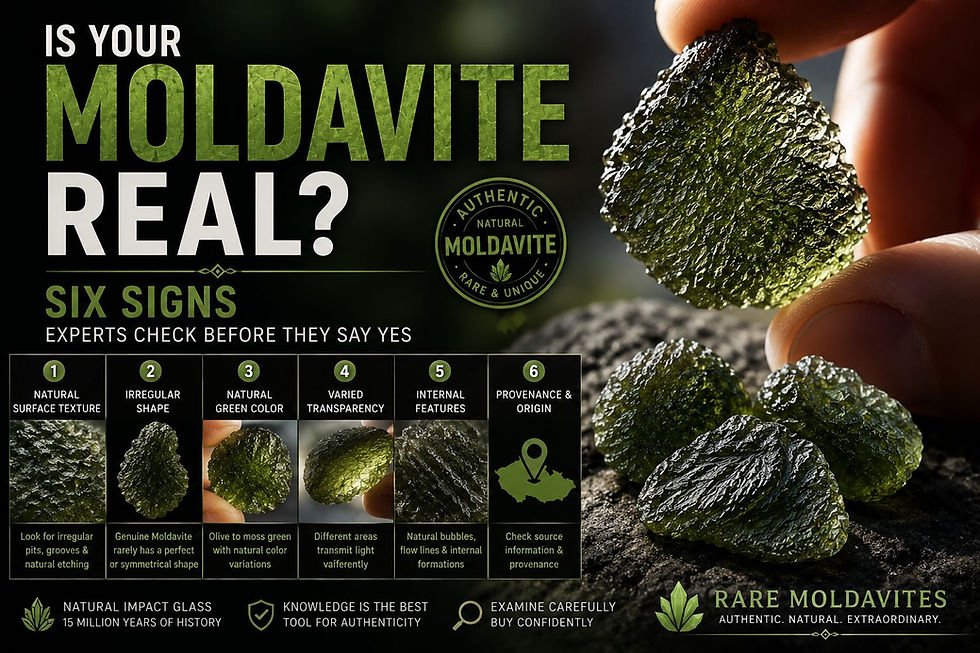
The best way to buy a Moldavite display specimen is to inspect the specimen in a fixed order. First, check the shape. Second, check the surface. Third, check the documentation. Fourth, compare the asking price against other large pieces of similar size and quality. That process keeps the buyer focused on the stone instead of the marketing language. GIA’s work on natural glasses supports this approach because visual structure and lab confirmation both matter when a buyer tries to separate natural material from imitation.
Check the silhouette. A premium specimen should look balanced and natural.
Check the surface relief. Collector-grade pieces should show detail that remains interesting under side light.
Check the condition. Heavy edge damage lowers display value quickly.
Check the size-to-quality ratio. A large piece with weak form is not the same as a premium piece.
Check provenance or seller clarity. Clear measurements and plain descriptions build trust.
A useful real-world example comes from current listings. One large piece is marketed at 29.0 grams and priced at US$2,150 or best offer, while a 20.6 gram museum-grade specimen is listed at US$1,590. Those two examples show that weight alone does not set the price. Display character, presentation, and seller positioning all shape the premium. That is exactly why buyers should compare more than gram weight.
The smartest buyer treats premium Moldavite like a long-term collection decision, not a quick impulse purchase. That habit keeps the buyer aligned with value, not hype.
According to the Gemological Institute of America, Moldavite is a natural glass formed by meteorite impact, and GIA’s 2024 infrared spectroscopy research states that manufactured glass can be distinguished from natural glasses such as Moldavite through FTIR analysis. The International Gem Society also describes Moldavite as a rare green natural glass prized by collectors, which supports the premium behavior seen in large display specimens today.
Frequently Asked Questions
What makes Large Moldavite stones so expensive?
Large Moldavite stones are expensive because the market has far fewer attractive big specimens than small ones, and collectors pay more for display presence. The price rises again when the stone keeps a natural shape, shows strong surface relief, and comes with clear measurements or provenance. Current listings for 20.6 gram and 29.0 gram pieces show how quickly the market moves into premium territory once size and display quality combine.
What is the best way to judge a Moldavite display specimen?
The best way to judge a Moldavite display specimen is to inspect shape, surface detail, condition, and seller clarity in that order. A true display specimen should look impressive from a distance and still hold interest up close. GIA’s identification research supports the idea that structure matters, because natural glass and manufactured glass separate more reliably when the buyer looks beyond colour alone.
Why do museum-quality display minerals command a premium?
Museum-quality display minerals command a premium because the best pieces combine rarity, preservation, and visual strength. A specimen that feels complete and sculptural can sit in a collection for years without losing appeal. The market rewards that kind of presence, especially when the specimen also carries a rare origin story and strong collector demand.
How does moldavite scarcity 2026 affect pricing?
Moldavite scarcity 2026 keeps top prices firm because the best large pieces do not stay available for long. Current premium listings show that both specialist shops and marketplaces continue to frame large pieces as investment-grade or museum-grade. That suggests that buyer demand still meets a limited supply at the top end of the market.
Is a 20g moldavite piece worth buying?
A 20g moldavite piece is worth buying when the specimen has a strong shape, good display presence, and a clear place in your collection. A large piece with weak form or obvious damage is not the same as a premium specimen. A buyer should compare the piece against other large stones, not just against smaller jewelry-grade material.
What common mistakes do buyers make with Rare heavy tektites?
Buyers of Rare heavy tektites often make the mistake of chasing size before quality. Another common mistake is trusting the label without checking shape, surface relief, and documentation. The safest approach is to compare display value first and gram weight second, because the market rewards presentation far more than bulk alone.
When should I pay the premium for a large Moldavite stone?
You should pay the premium when the stone feels like a true collector piece, not just a larger version of a common rough stone. If the specimen has strong form, clear visual appeal, and enough presence to anchor a display, the premium can make sense. If the piece lacks those traits, the price is probably too high for the quality offered.
CONCLUSION
The premium for Large Moldavite stones comes from a simple truth: big, attractive specimens are rare, and the best ones display beautifully. A strong Moldavite display specimen combines size, natural form, and visual power in a way smaller pieces cannot match. That is why the market keeps rewarding premium stones in 2026.
The smartest buyers focus on the stone itself, not just the label. Shape, condition, provenance, and display presence matter more than weight alone. If this guide helped, share it, comment with your biggest Moldavite question, or explore more collector guides from Rare Moldavites.

Comments