
How to Choose Between Libyan Desert Glass and Moldavite

QUICK ANSWER BOX
Libyan Desert Glass vs Moldavite comes down to look, wearability, and collecting goals. Moldavite is the better fit for buyers who want darker green color, stronger texture, and a more famous collector story, while Libyan Desert Glass is the better fit for buyers who want a warmer tone, smoother feel, and easier daily wear.
INTRODUCTION
Libyan Desert Glass vs Moldavite is one of the most common buying decisions for people who want a rare natural stone with a cosmic origin. The cosmic tektites comparison is simple at the surface, but the buying choice is not simple at all. Moldavite is a rare green natural glass formed by meteorite impact, while Libyan Desert Glass is a light green to yellow natural glass from Egypt’s Western Desert that GIA describes as almost 98 percent silica.
Who This Is For: collectors, jewelry buyers, crystal shoppers, and first-time buyers who want a stone that fits their budget, style, and purpose.
The problem is that many pages stop at color and folklore. Buyers still need a clear decision path for rarity, daily wear, authenticity checks, and value. This guide gives that path in plain language, with enough detail to help you choose the right stone the first time.
TABLE OF CONTENTS
What Each Stone Is, Defined Simply
How They Look and Feel Differently
How to Choose the Right Stone for Your Goal
How to Buy Safely in 2026
Price, Rarity, and Value in Real Life
What Each Stone Is, Defined Simply
The Libyan desert glass vs moldavite decision starts with geology, not marketing. Moldavite is a rare natural glass formed by a meteorite impact in central Europe about 15 million years ago, and gem authorities describe it as a rare material that attracts collectors because of its impact origin. Libyan Desert Glass is a light green or yellow natural glass from Egypt’s Western Desert, and GIA describes it as almost 98 percent silica, with bubbles, flow structure, and cristobalite inclusions that support its natural formation.
That difference matters because these two stones do not behave the same way in the hand. Moldavite usually reads as darker, more textured, and more dramatic. Libyan Desert Glass usually reads as warmer, cleaner, and more understated. In a broad rare meteorite glass category, both are special, but they serve different buyers. In my experience, that is the point most shoppers miss. They compare the origin story first and the wearing experience too late.
For a simple mental model, think of Moldavite as the louder statement piece and Libyan Desert Glass as the quieter one. That framing helps before you compare appearance and daily use.
How They Look and Feel Differently
The easiest visual difference in this libyan desert glass vs moldavite comparison is texture. GIA notes that moldavite can show flow lines that become visible under shadowed illumination, and GIA also explains that manufactured glass can be separated from natural glasses such as moldavite with FTIR analysis. Libyan Desert Glass, by contrast, is commonly described in GIA lab notes as nearly pure silica with gas bubbles, flow structure, and cristobalite spherulites.

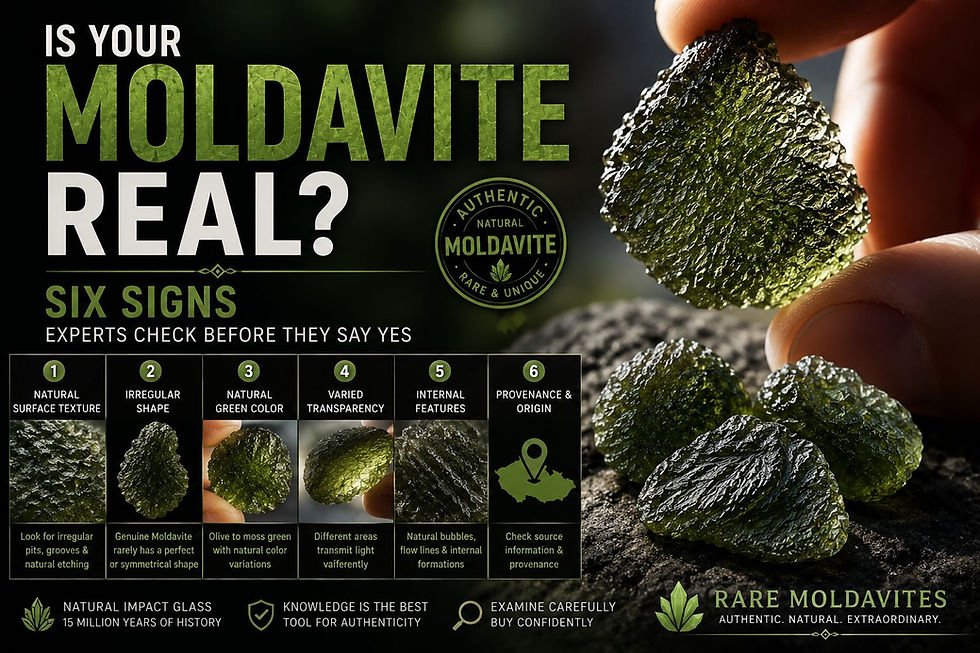
Moldavite usually has a deeper green body color, more surface sculpting, and a more chaotic texture. Libyan Desert Glass usually has a softer yellow-green to light green look, a smoother surface, and a more polished visual rhythm. That is why Moldavite often photographs as more intense, while LDG often photographs as more elegant. The difference shows up even more after polishing or faceting, because LDG keeps a gentler visual tone, while Moldavite keeps stronger contrast.
A useful analogy is footwear. Moldavite is the bold boot that changes the whole outfit. Libyan Desert Glass is the clean loafer that works across more settings. Both look good, but they signal different moods. That difference becomes even more important when you choose the stone for a specific goal.
How to Choose the Right Stone for Your Goal
The best choice in libyan desert glass vs moldavite depends on why you are buying. If you want a darker, more famous collector stone with a strong visual story, Moldavite usually fits better. If you want a lighter, warmer stone that feels easier to wear every day, Libyan Desert Glass usually fits better. Some shoppers place both in the high vibration stones category, but the smarter decision is still practical: match the stone to the way you will wear it.
Choose Moldavite if you want a statement piece with strong texture and a collector identity.
Choose Libyan Desert Glass if you want a softer color and a more refined daily-wear look.
Choose Moldavite if you are drawn to a darker green aesthetic.
Choose Libyan Desert Glass if you prefer a golden or pale green tone in jewelry.
A common mistake I see with clients is this: they buy Moldavite because the story sounds powerful, then realize they wanted something more subtle for work or daily wear. The stone is not the problem. The mismatch is the problem. I have seen buyers become much happier when they choose LDG for everyday pieces and save Moldavite for a special pendant or collector item. That is the real-world side of this choice.
When people ask for a simple answer, I say this: buy Moldavite for the stronger visual punch, and buy Libyan Desert Glass for the easier styling choice. The next section shows how to buy either one without getting misled.
How to Buy Safely in 2026
The visible search results for libyan desert glass vs moldavite tend to lean toward origin summaries, appearance notes, and energy language. The result set I found includes a comparison article that focuses on origins and mystical associations, retailer-style pages that emphasize appearance and properties, and social posts that frame the stones in vibe language. That means the current content gap is practical buyer guidance, not more poetry. This guide fills that gap with a decision framework.
The safest buying process is straightforward.
Ask for the exact origin or locality.
Ask for macro photos in neutral light.
Ask whether the stone is polished, faceted, or rough.
Ask how the seller identified the material.
For expensive pieces, ask whether lab testing or FTIR support exists. GIA notes that FTIR can distinguish manufactured glass from naturally occurring glasses such as moldavite.
The reason this matters is simple. Both stones are often sold with big claims, but only clear visuals and clear sourcing reduce risk. Libyan Desert Glass can be confused with other yellow-green material, and moldavite can be imitated with manufactured glass. If a seller avoids close-ups, avoids origin details, or pushes urgency, pause. Good sellers explain the stone. Weak sellers push the story.
Price, Rarity, and Value in Real Life
In real buying terms, value is not just about rarity. It is about recognition, wearability, and how much you enjoy the stone after purchase. Moldavite has strong collector recognition and a long reputation as a rare impact glass. GIA and the International Gem Society both describe it as a rare natural glass tied to meteorite impact, which helps explain why it has such strong market identity. Libyan Desert Glass is also rare, but it often appeals to a different buyer, one who wants a lighter visual profile and a more versatile jewelry look.
For 2026 buyers, the smartest question is not “Which stone is better?” The smarter question is “Which stone will I actually wear, enjoy, and verify?” If you want a bold collectible with stronger name recognition, Moldavite often wins. If you want a warm-toned piece that pairs easily with gold or daily outfits, Libyan Desert Glass often wins. In a commercial sense, that difference matters more than abstract hype.
A final point helps buyers avoid regret. A stone that looks exciting in a product photo may not fit your wardrobe, your skin tone, or your comfort level. A stone that feels calm and balanced in the hand often becomes the piece you reach for most. That is where value becomes personal, not just geological.
According to the Gemological Institute of America, manufactured glass can be distinguished from naturally occurring glasses such as moldavite using FTIR analysis, and GIA’s lab notes describe Libyan Desert Glass as almost 98 percent silica with bubbles, flow structure, and cristobalite inclusions. That gives buyers a practical scientific baseline for comparing look, structure, and authenticity.
Frequently Asked Questions
What is the best way to choose between Libyan Desert Glass and Moldavite?
The best way to choose is to start with how you plan to wear the stone. Moldavite is the stronger pick for buyers who want a darker green look, stronger texture, and a more famous collector identity, while Libyan Desert Glass is the better pick for buyers who want a softer tone and easier daily wear. I tell buyers to compare both stones in daylight, on skin, before they buy. That one step makes the decision much clearer.
Why do collectors pay more attention to Moldavite?
Collectors pay more attention to Moldavite because Moldavite has strong name recognition, a dramatic formation story, and a very clear visual identity. GIA and the International Gem Society both describe Moldavite as a rare natural glass formed by meteorite impact, which helps explain why it stands out in collector circles. Libyan Desert Glass is also special, but Moldavite usually gets more attention in the market and in jewelry conversations.
How can you tell the difference quickly when shopping online?
You can tell the difference quickly by checking color, texture, and seller transparency. Moldavite usually looks darker and more heavily textured, while Libyan Desert Glass usually looks warmer and smoother. GIA also notes that FTIR can distinguish manufactured glass from natural glasses such as moldavite, so vague photos and vague sourcing should make buyers cautious. Close-up daylight photos and exact origin details are the fastest online checks.
Is Libyan Desert Glass worth buying in 2026?
Libyan Desert Glass is worth buying in 2026 if you want a rare stone that wears easily and looks elegant in jewelry. GIA describes it as a light green or yellow natural glass with distinctive inclusions and flow structure, which gives it real gemological interest beyond the marketing. Buyers who prefer a quieter look often find it easier to live with than Moldavite. That makes it a strong purchase for everyday wearers.
What common mistakes do buyers make with cosmic tektites?
The most common mistake is buying on story alone instead of buying on structure and use case. People hear a dramatic origin story, then ignore texture, origin details, and how the stone will actually look on the body. Another mistake is trusting product photos that are too polished or too heavily filtered. The safest buyers slow down, compare close-ups, and choose the stone that fits their real-life wear habits.
When is Moldavite worth buying instead of Libyan Desert Glass?
Moldavite is worth buying instead of Libyan Desert Glass when the buyer wants stronger color contrast, a more dramatic collector look, and a stone with high visual presence. Moldavite also makes sense when the buyer already loves green impact glass and wants a piece that feels more iconic. If the goal is a bold pendant or a collector-grade specimen, Moldavite often gives the stronger emotional and visual payoff.
CONCLUSION
The libyan desert glass vs moldavite choice becomes easy when you focus on the right things. Moldavite gives you the stronger green color, deeper texture, and bigger collector presence. Libyan Desert Glass gives you the warmer tone, softer look, and easier everyday wear. Both are real rare impact glasses, but they serve different buyers.
If you want a bold statement stone, Moldavite usually wins. If you want a calmer, more versatile piece, Libyan Desert Glass usually wins. Share this guide, explore the related posts below, or leave a comment on which stone fits your style best.

Comments