
Tektite Glass, What Is It, Where Does It Form, and Why Is Moldavite Special?

QUICK ANSWER BOX
Tektite glass is natural glass created when a meteorite impact melts terrestrial material and ejects it into the atmosphere. As the molten material cools and falls back to Earth, it forms unique natural glasses called tektites. Moldavite is considered one of the most famous tektites because of its rarity, Czech origin, distinctive green color, and connection to the Ries crater impact event.
INTRODUCTION
Few geological materials combine planetary violence, natural beauty, and scientific intrigue quite like tektite glass. Formed during some of Earth's most powerful impact events, tektites are physical evidence of ancient cosmic collisions that permanently changed landscapes and created entirely new materials. Among all known tektites, Moldavite has attracted exceptional attention from collectors, researchers, and enthusiasts alike. Its green color, limited geographic distribution, and connection to a single meteorite impact have helped make it one of the most recognizable impact-formed glasses in the world.
Who This Is For: This guide is designed for collectors, geology enthusiasts, mineral lovers, impact crater researchers, and anyone curious about the origins of Moldavite and other natural impact glasses. In this article, you will learn how tektites form, where they are found, how Moldavite compares to other impact glasses, and why genuine Moldavite remains one of the most sought-after examples of natural impact glass.
TABLE OF CONTENTS
• What Is Tektite Glass?
• How Does Tektite Glass Form?
• Major Types of Tektites Found Worldwide
• What Is Moldavite?
• Tektite vs Moldavite: Understanding the Difference
• Why Moldavite Is Different From Other Impact Glasses
• Why Collectors Value Authentic Moldavite
What Is Tektite Glass?
The term tektite glass is defined as a naturally occurring glass formed when a meteorite impact melts terrestrial rocks and ejects molten material high into the atmosphere. As the material cools during flight, it solidifies into glass before returning to Earth. Unlike volcanic glass such as obsidian, tektites originate from impact events rather than volcanic activity. Their formation requires enormous temperatures and pressures that occur during large meteorite collisions.
Scientists classify tektites as impact-generated natural glasses. These materials often display aerodynamic shapes because they cooled while traveling through the atmosphere.
Common characteristics include:
• Natural glass composition
• Low water content
• Surface sculpting
• Flow structures
• Impact-related origin
Many people assume all impact glasses are identical. In reality, different impact events produce different types of material depending on geology, impact energy, and environmental conditions. This distinction becomes important when comparing Moldavite with other famous impact glasses around the world.
How Does Tektite Glass Form?
The process that creates impact glass begins with a high-velocity meteorite collision. When a large asteroid strikes Earth, temperatures can reach several thousand degrees Celsius almost instantly. Rocks, soil, and sediment near the impact site melt or vaporize within seconds.
The formation process generally follows these steps:
Meteorite strikes Earth.
Impact energy melts surrounding material.
Molten debris ejects into the atmosphere.
Material cools rapidly during flight.
Glass fragments fall back to Earth.
The exact appearance of the resulting glass depends on several factors:
• Impact velocity
• Target rock composition
• Distance from the crater
• Atmospheric conditions
• Cooling rate
A useful analogy is molten glass being thrown into the air during an explosion and freezing before it lands. While simplified, this helps explain why many tektites display unusual shapes and surface textures.
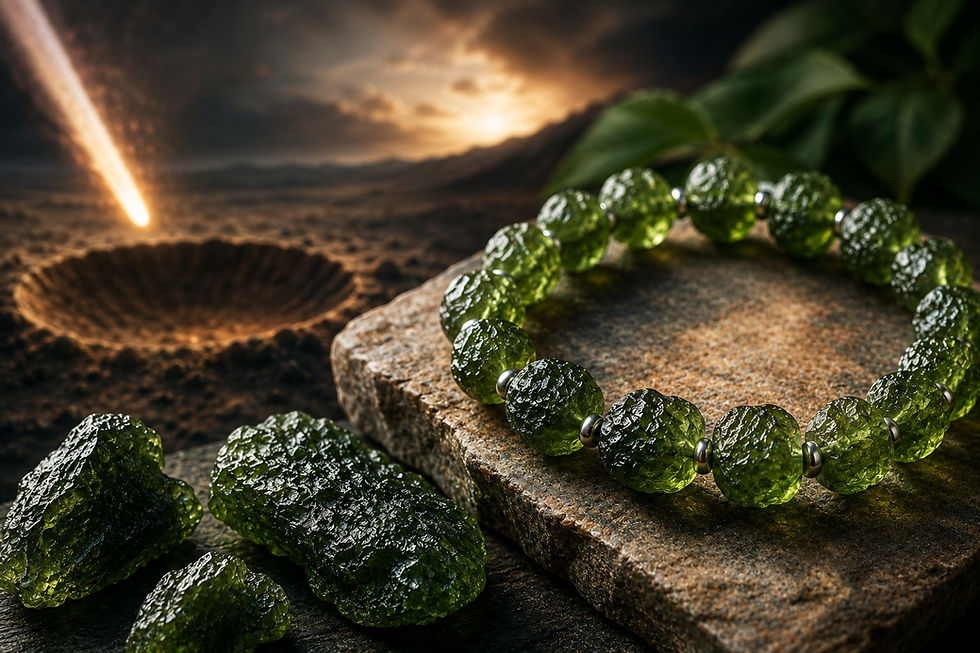
The Ries crater impact event in what is now Germany followed this same basic process. That single collision ultimately created Moldavite approximately 14.8 million years ago. The next step is understanding the different tektite groups that formed from various impact events around the world.
Major Types of Tektites Found Worldwide
Not all tektites look alike. Different impact events created different strewn fields and distinct glass varieties.
Some of the best-known examples include:
Moldavite
Found primarily in the Czech Republic, Moldavite is famous for its green color and strong collector interest.
Australites
Australites occur mainly in Australia and often display button-like aerodynamic forms created during atmospheric flight.
Indochinites
Indochinites appear across parts of Southeast Asia and represent one of the largest known tektite strewn fields.
Ivory Coast Tektites
These tektites originated from the Bosumtwi impact crater in Ghana and are considerably rarer than many Asian varieties.
Libyan Desert Glass
Although often grouped alongside tektites in popular discussions, libyan desert glass remains scientifically distinct and continues to generate research interest regarding its exact formation mechanism.
Many collectors begin with black tektites and later develop an interest in Moldavite because of its unique appearance and limited availability. Understanding these varieties helps answer one of the most common questions asked by collectors: what exactly is Moldavite, and why does it stand apart from other impact glasses?
What Is Moldavite?
The question of what is moldavite appears frequently among collectors because Moldavite occupies a unique position within the world of impact glass. Moldavite is a natural green tektite formed approximately 14.8 million years ago during the Ries crater meteorite impact event.
When the asteroid struck near present-day Germany, enormous amounts of molten material were blasted into the atmosphere. Some of that material traveled hundreds of kilometers before cooling and falling across areas that are now part of the Czech Republic. The term Moldavite comes from the Moldau River region, known today as the Vltava River. Most authentic Moldavite originates from South Bohemia and South Moravia, where collectors continue to search for locality-specific specimens.
Several features distinguish Moldavite from many other tektites:
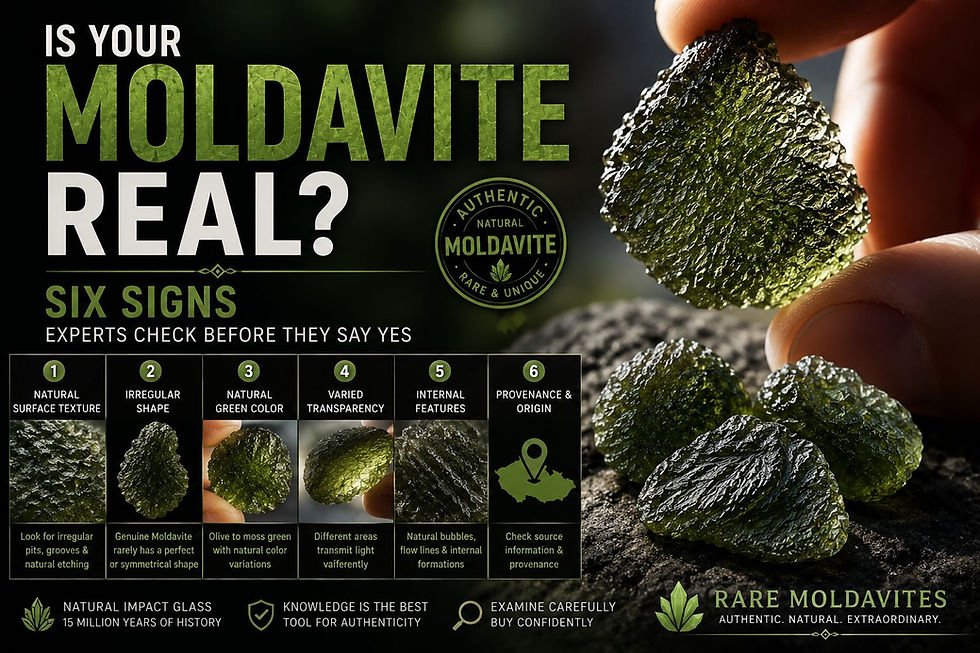
• Olive-green to forest-green coloration
• Natural etched surface texture
• Flow lines and internal structures
• Distinctive sculpting
• Limited geographic occurrence
Unlike many minerals that form continuously through geological processes, Moldavite formed during a single impact event. This fact alone contributes significantly to its rarity. In my experience studying collector-grade specimens, one of the most fascinating aspects of Moldavite is how no two pieces appear exactly alike. Every specimen preserves evidence of its violent formation and atmospheric journey.
As awareness continues to grow in 2026, Moldavite remains one of the most recognizable examples of natural impact glass ever discovered. Understanding Moldavite properly requires comparing it directly to the broader tektite family.

Tektite vs Moldavite: Understanding the Difference
The phrase tektite vs moldavite causes confusion because Moldavite itself is a tektite. The better comparison is between Moldavite and other tektite varieties.
The term tektite describes an entire category of natural impact glass. Moldavite represents one specific member of that category.
Think of it this way:
• Tektite = category
• Moldavite = specific type within that category
A simple analogy helps clarify the distinction. "Bird" describes a category, while "eagle" identifies a specific bird species. Similarly, tektite refers to a group, while Moldavite refers to one particular variety. Several characteristics make Moldavite different from many other tektites:
Color
Most tektites appear black, dark brown, or very dark green. Moldavite is famous for its translucent green coloration.
Geographic Distribution
Many tektites occur across large regions. Authentic Moldavite remains restricted primarily to parts of the Czech Republic.
Surface Texture
Moldavite often displays deep etching and natural sculpting that collectors find highly attractive.
Collector Demand
Few tektites generate the same level of collector interest as Moldavite. Its rarity, appearance, and history contribute to exceptionally strong demand.
A common mistake I see involves people referring to all green impact glass as Moldavite. Authentic Moldavite comes from a very specific geological context linked directly to the Ries impact event. This distinction helps explain why Moldavite occupies a special place within the broader world of impact glasses.
Why Moldavite Is Different From Other Impact Glasses
The term impact glass covers many materials, but Moldavite possesses several characteristics that make it particularly significant.
It Formed From a Single Known Impact Event
Scientists confidently connect Moldavite to the Ries crater impact that occurred approximately 14.8 million years ago. Few collector materials have such a well-established origin story.
It Exists in a Limited Strewn Field
Unlike some impact materials that occur across extensive regions, Moldavite appears primarily within specific areas of the Czech Republic.
It Displays Exceptional Visual Character
Collectors often seek Moldavite because of its:
• Natural translucency
• Green coloration
• Sculpted texture
• Aerodynamic forms
• Geological individuality
Supplies Continue to Shrink
One factor frequently overlooked by competing articles involves availability. High-quality Moldavite specimens are becoming increasingly difficult to source because most significant deposits have already been worked. Many exceptional pieces now originate from existing private collections rather than newly available material.
It Bridges Science and Collecting
Moldavite appeals simultaneously to:
• Geologists
• Impact researchers
• Mineral collectors
• Jewelry enthusiasts
• History lovers
This broad appeal helps explain its enduring popularity.
When working with collectors, I often notice that people initially become interested because of the meteorite story but stay interested because every specimen feels like a preserved fragment of Earth's cosmic history. These characteristics explain why Moldavite remains one of the most desirable impact glasses available today.
Why Collectors Value Authentic Moldavite
Collectors evaluate Moldavite differently than ordinary gemstones. The value of authentic Moldavite often comes from a combination of rarity, provenance, geological significance, and specimen quality.
Several factors influence collector demand:
Czech Origin
Authentic Czech provenance remains one of the most important considerations.
Locality
Collectors frequently seek pieces from famous localities such as:
• Besednice
• Chlum
• Slavce
• South Bohemia
• South Moravia
Surface Preservation
Well-preserved natural sculpting often attracts stronger collector interest.
Size and Form
Large intact specimens remain increasingly uncommon.
Geological Authenticity
Collectors value natural formation features such as:
• Flow lines• Bubbles
• Etched textures
• Natural contours
Unlike many commercial gemstones, Moldavite cannot be replenished through future discoveries on a meaningful scale. This reality has encouraged increasing interest in verified specimens from established collections. For educational platforms and collector-focused resources such as Rare Moldavites, the emphasis remains on geological authenticity, rarity, and provenance rather than mass-market availability.
As global awareness grows, collectors increasingly seek specimens that preserve both scientific importance and natural beauty. This growing interest highlights why expert verification and geological research remain essential when discussing Moldavite today.
According to research published by the Geological Survey of the Czech Republic and multiple studies examining the Ries crater impact structure, Moldavite formed as a result of a meteorite impact approximately 14.8 million years ago. Researchers have identified Moldavite as a natural impact-generated glass whose distribution, chemistry, and formation history directly connect it to the Ries crater event. These studies continue to provide some of the strongest evidence supporting Moldavite's unique place among the world's known tektites.
What is tektite glass and how is it formed?
Tektite glass is a natural glass created when a meteorite strikes Earth with tremendous force and melts surrounding rocks and sediments. The molten material is launched into the atmosphere, where it cools rapidly before falling back to the surface. This process creates unique natural glass objects known as tektites. Unlike volcanic glass, tektites form through impact events rather than volcanic eruptions. Their composition, shape, and distribution provide valuable evidence of ancient cosmic collisions that changed Earth's geological history.
What is the difference between Moldavite and other tektites?
Moldavite differs from many other tektites because of its distinctive green color, limited Czech origin, and direct connection to the Ries crater impact event. Most tektites found around the world are black, dark brown, or nearly opaque. Moldavite often displays translucency, natural sculpting, and unique surface etching that collectors find especially attractive. While Moldavite belongs to the tektite family, its rarity and appearance make it one of the most recognizable impact glasses on Earth.
Is Libyan Desert Glass a tektite?
Libyan Desert Glass is often discussed alongside tektites, but scientists continue to study its exact classification and formation history. Like tektites, it formed under extreme temperatures associated with a major impact-related event. However, Libyan Desert Glass differs from Moldavite and traditional tektites in composition, color, and formation characteristics. Its beautiful golden-yellow appearance has made it highly desirable among collectors and researchers interested in rare natural impact materials.
Why is Moldavite considered rare?
Moldavite is considered rare because it formed during a single meteorite impact event approximately 14.8 million years ago and occurs primarily within specific regions of the Czech Republic. Unlike minerals that continue forming through natural geological processes, Moldavite represents a finite resource. High-quality specimens become increasingly difficult to obtain as significant deposits have already been explored. Many exceptional examples available today originate from established private collections rather than newly available sources.
What is the best way to identify authentic Moldavite?
The best way to identify authentic Moldavite is to examine its natural texture, internal structures, provenance, and locality information. Genuine Moldavite typically displays natural etching, irregular contours, flow lines, and small bubbles created during its formation. Authentic specimens also originate from known Czech localities such as Besednice, Chlum, and South Moravia. Buyers should be cautious of overly smooth, perfectly shaped, or unusually inexpensive pieces because imitation glass products are common in the marketplace.
What is the best way to start collecting tektites?
The best way to start collecting tektites is by learning the differences between major varieties and focusing on authenticity rather than quantity. New collectors often begin with common black tektites before expanding into more specialized materials such as Moldavite or Libyan Desert Glass. Studying locality information, geological formation, and specimen characteristics helps collectors make informed decisions. Building knowledge first often leads to a stronger and more meaningful collection over time.
Is Moldavite worth collecting in 2026?
Yes, Moldavite remains one of the most sought-after impact glasses for collectors in 2026 because of its rarity, geological significance, and limited supply. Collectors appreciate its documented connection to the Ries crater impact event and its restricted occurrence within the Czech Republic. High-quality specimens with verified provenance continue attracting interest from geology enthusiasts and advanced collectors. As awareness grows and supplies remain limited, educational understanding and authenticity become increasingly important.
CONCLUSION
Understanding tektite glass provides a fascinating glimpse into some of the most dramatic events in Earth's history. These natural impact glasses preserve evidence of ancient meteorite collisions and offer scientists valuable insight into planetary processes.
Among all known tektites, Moldavite remains especially remarkable. Its green color, Czech origin, limited distribution, and direct connection to the Ries crater impact event have made it one of the most studied and collected impact glasses in the world. As authentic specimens become increasingly difficult to source, geological provenance and education continue to play an important role in responsible collecting.
If you would like to continue exploring the history, rarity, and geological significance of authentic Czech Moldavite, browse the educational resources available through Rare Moldavites and discover why this extraordinary impact glass continues to captivate collectors worldwide.

Comments