
Is Moldavite Rarer Than Diamonds? A Geologist's Honest Comparison

QUICK ANSWER BOX
Yes, Moldavite is rare because it formed from a single meteorite impact around 14.8 million years ago and exists mainly within limited Czech Republic localities. While diamonds are commercially mined worldwide, authentic Moldavite comes from a shrinking geological source, making high-quality collector specimens significantly harder to replace.
INTRODUCTION
Most people assume diamonds are automatically rarer than every other gemstone on Earth. That belief changes quickly once collectors discover how Moldavite actually formed. Unlike diamonds, which exist in multiple mining regions worldwide, Moldavite originated from one ancient meteorite impact event and can only be found in limited parts of Central Europe. The question is moldavite rare has become increasingly important in 2026 because authentic Czech Moldavite continues becoming harder to source while global collector demand rises rapidly. Prices have increased, counterfeit products have flooded online marketplaces, and serious collectors now compare premium Moldavite to museum-grade minerals and meteorites rather than ordinary gemstones.
Who This Is For: This guide is designed for Moldavite collectors, crystal enthusiasts, jewelry buyers, geology lovers, investors, and anyone curious about how Moldavite compares to diamonds in rarity and long-term value. In this article, you will learn how Moldavite formed, why supply remains limited, whether it is truly rarer than diamonds, and how collectors evaluate Moldavite value today.
TABLE OF CONTENTS
What Makes Moldavite Rare?
Is Moldavite Rarer Than Diamonds?
How Moldavite Formed From a Cosmic Impact
Why Moldavite Supply Keeps Shrinking
What Influences Moldavite Value?
Is Moldavite a Good Long-Term Investment?
How Collectors Identify High-Value Moldavite
What Makes Moldavite Rare?
The term is moldavite rare refers to the limited geological availability of authentic Moldavite compared to ordinary minerals and gemstones. Moldavite formed only once in Earth’s history after the Ries crater meteorite impact approximately 14.8 million years ago.
Unlike gemstones created through continuous geological processes, Moldavite resulted from a single violent cosmic event. Molten terrestrial material launched into the atmosphere before cooling into natural green tektite glass across sections of Central Europe.
Several factors make Moldavite exceptionally rare:
Single known formation event
Limited geographical distribution
Decreasing mining deposits
Rising global collector demand
Increasing counterfeit activity
Most authentic Moldavite comes from the Czech Republic, especially South Bohemia and Moravia. Famous localities such as Besednice, Chlum, and Slavce produce highly collectible specimens with unique textures and geological character.
A common misunderstanding is that rarity depends only on visual appearance. Geological rarity depends more heavily on:
formation conditions
availability
replacement difficulty
locality restriction
In my experience working with collectors, many buyers initially compare Moldavite to emeralds or peridot because of its green color. Once they understand the geological origin, they begin viewing Moldavite more like rare meteorites or impact-generated museum specimens. This distinction becomes especially important when comparing Moldavite directly with diamonds.

Is Moldavite Rarer Than Diamonds?
The question is whether moldavite is rarer than diamonds requires a geological comparison rather than a marketing comparison. Scientifically speaking, high-quality Moldavite is far rarer geographically than commercial diamonds.
Diamonds are mined across multiple continents, including:
Africa
Russia
Canada
Australia
South America
Moldavite, however, comes mainly from restricted regions within the Czech Republic connected to a single impact event. That difference matters significantly. Diamonds remain commercially abundant because mining operations continue producing new material globally every year. Moldavite cannot regenerate. Once existing deposits disappear, no new natural source will form.
Several points explain the rarity difference clearly:
Diamonds
Continuous commercial mining
Multiple global deposits
Industrial-scale production
Large yearly supply
Moldavite
Single ancient formation event
Limited Czech localities
Shrinking excavation areas
Finite remaining material
A useful analogy compares Moldavite to a discontinued historical artifact while diamonds function more like an actively manufactured luxury resource. This does not automatically mean Moldavite costs more than diamonds overall. Large flawless diamonds still command extremely high prices because of jewelry demand and grading systems. However, collector-grade Moldavite often becomes harder to replace than many commercial diamonds.
Many top-ranking articles oversimplify this discussion and ignore geological supply mechanics entirely. Geological rarity and commercial pricing are not always the same thing. That distinction becomes clearer when understanding how Moldavite formed originally.
How Moldavite Formed From a Cosmic Impact
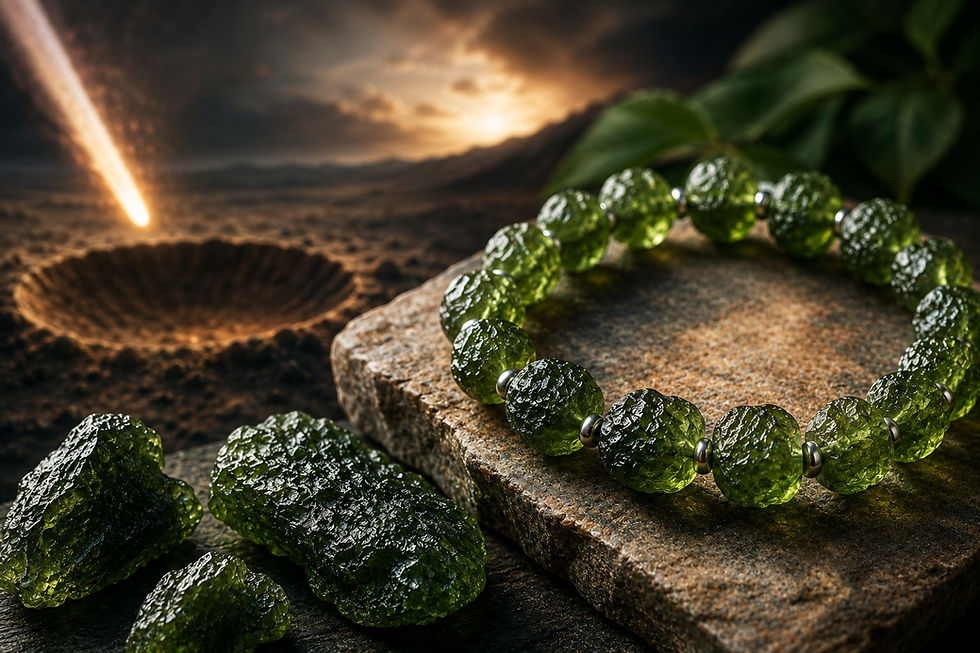
The formation of Moldavite explains why authentic supply remains so restricted today. The moldavite value story begins approximately 14.8 million years ago when a meteorite struck near the Ries crater region in present-day Germany. The collision generated extreme heat and pressure powerful enough to melt terrestrial material instantly. Scientists define Moldavite as a natural tektite glass formed through meteorite impact ejecta.
During the explosion:
molten material launched high into the atmosphere
ejecta cooled rapidly during flight
fragments scattered across Central Europe
natural glass solidified before landing
The resulting material became Moldavite.
Unlike volcanic glass, Moldavite contains:
flow lines
gas bubbles
lechatelierite inclusions
etched natural texture
These features formed through chaotic atmospheric cooling conditions rather than standard geological crystallization.
According to geological studies examining the Ries crater ejecta field, Moldavite represents one of the clearest known examples linking a specific meteorite impact to a verified tektite distribution zone. A common mistake I see among new collectors involves assuming Moldavite can still form naturally through modern geological activity. That is impossible under normal Earth conditions because the original impact event happened only once.
This singular origin explains why Moldavite behaves differently from gemstones mined continuously worldwide. As awareness grows in 2026, collectors increasingly appreciate Moldavite not only as jewelry material but also as preserved evidence of a prehistoric cosmic event. That rarity directly affects current supply conditions.
Why Moldavite Supply Keeps Shrinking
The supply of authentic Moldavite continues shrinking because the material is finite. Mining regions within the Czech Republic cannot replenish themselves once deposits become exhausted.
Several factors accelerate scarcity:
historical excavation depletion
environmental restrictions
collector demand growth
online market expansion
premium jewelry demand
The term rare moldavite now applies especially to:
locality-specific specimens
large preserved pieces
deeply etched texture
museum-grade quality
transparent formations
Modern collectors increasingly search for:
Besednice hedgehog Moldavite
Chlum aerodynamic forms
large intact specimens
high-transparency material
This trend places additional pressure on already limited supply.
A real-world example illustrates the problem clearly. Years ago, collectors could purchase large Moldavite specimens relatively easily from Czech dealers. Today, equivalent pieces often disappear quickly because advanced collectors recognize how difficult premium material has become to replace. Social media exposure also changed the market dramatically. Viral collector videos introduced Moldavite to millions of new buyers globally. Unfortunately, counterfeit Moldavite production expanded at the same time.
In my experience reviewing online listings, many fake Moldavite sellers exploit buyer excitement by offering oversized green glass replicas at unrealistic prices. This growing scarcity explains why many collectors now discuss Moldavite as both a geological collectible and a potential long-term asset.
What Influences Moldavite Value?
The term moldavite value is defined by several interconnected factors including rarity, locality, texture, size, preservation, and authenticity. Many people assume size alone determines value. Advanced collectors evaluate Moldavite differently.
Several characteristics influence pricing heavily:
Locality origin
Surface texture
Transparency
Preservation quality
Authentic provenance
Shape uniqueness
Besednice specimens often command premium prices because of dramatic hedgehog texture. Chlum Moldavite may attract collectors searching for aerodynamic symmetry.
Large intact pieces remain especially valuable because atmospheric travel and geological erosion damaged many original fragments over millions of years. A common misconception suggests smoother Moldavite is always lower quality. In reality, some localities naturally produce softer contours.
Collector behavior also changed significantly in 2026. Buyers increasingly prioritize:
geological authenticity
locality documentation
natural texture
museum-grade character
over polished commercial presentation.
Brands like Rare Moldavites focus on verified Czech sourcing because educated collectors now demand transparency and authentic geological provenance. This market evolution also explains why many people now discuss Moldavite as a collectible investment category.
Is Moldavite a Good Long-Term Investment?
The term moldavite investment refers to purchasing authentic Moldavite with the expectation that rarity and collector demand may increase future value.
Several factors support long-term collector interest:
finite supply
growing global awareness
geological uniqueness
historical significance
increasing authenticity education
Unlike mass-produced commercial gemstones, Moldavite cannot be manufactured naturally again. That geological limitation creates long-term scarcity pressure. However, experienced collectors usually focus on quality rather than speculation alone.
The strongest investment-grade Moldavite typically includes:
verified Czech origin
strong texture
natural preservation
collector locality
exceptional visual character
A common mistake I see involves buyers chasing quantity instead of rarity. Smaller premium specimens often outperform large low-quality pieces because advanced collectors prioritize uniqueness.
The Moldavite market also behaves differently from traditional gemstone markets. Collector psychology plays a major role. Many buyers feel emotionally connected to the material because it represents a real cosmic impact event preserved in glass form.
Some advanced collectors now compare premium Moldavite to:
meteorites
Libyan Desert Glass
museum minerals
rare opals
rather than ordinary jewelry stones. That shift continues strengthening the reputation of high-end Moldavite within the collector world.
How Collectors Identify High-Value Moldavite
Experienced collectors evaluate Moldavite carefully because authenticity and locality strongly influence value.
Several steps help identify premium material:
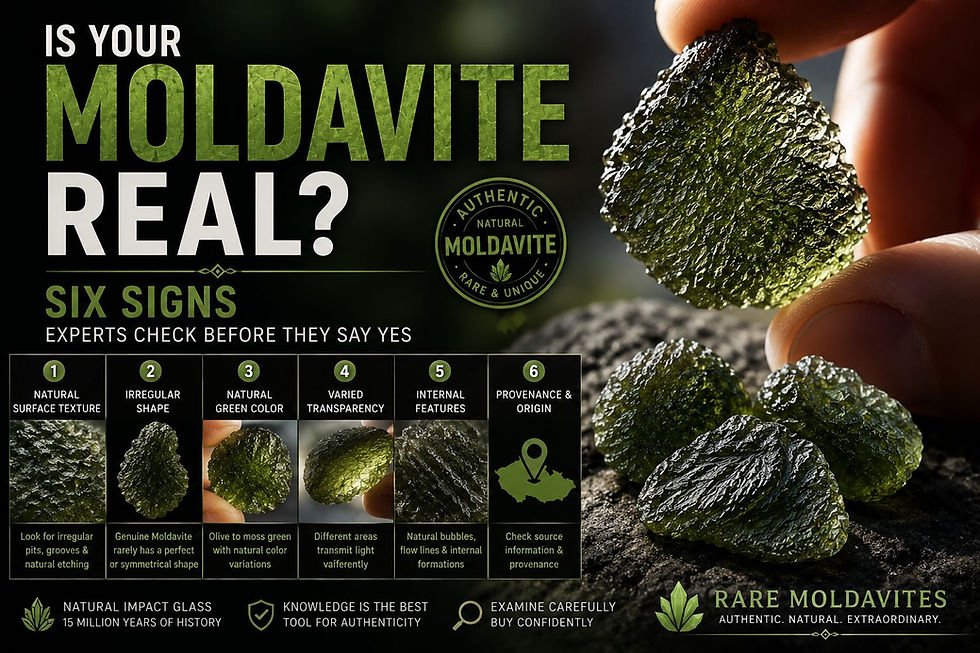
Examine Natural Texture: Authentic Moldavite displays irregular etching and organic surface sculpting formed through atmospheric cooling and erosion.
Check Internal Features: Real Moldavite contains:
bubbles
flow lines
inclusions
uneven internal structure
Verify Czech Locality: Trusted dealers usually identify localities such as:
Besednice
Chlum
Slavce
South Bohemia
Evaluate Preservation: Collectors prefer pieces with minimal edge damage and preserved natural shape.
Avoid Unrealistic Pricing: Extremely cheap Moldavite listings often indicate imitation glass rather than authentic impact material.
One analogy explains collector evaluation well. Advanced Moldavite collectors assess pieces similarly to art experts studying brushwork in rare paintings. Tiny natural imperfections often increase authenticity and character rather than reduce value. As collector education improves globally, geological knowledge continues becoming essential for serious Moldavite buying.
According to geological research associated with the Geological Survey of the Czech Republic and studies examining Ries crater impact ejecta, Moldavite formed from terrestrial material melted during a meteorite collision approximately 14.8 million years ago. Researchers identified Moldavite as one of the rarest natural impact glasses because its formation depended on extremely specific conditions that occurred within a limited geographical zone across Central Europe.
Frequently Asked Questions
Is Moldavite actually rarer than diamonds?
Yes, Moldavite is rarer than many commercial diamonds from a geological supply perspective because authentic Moldavite formed during one ancient meteorite impact event and exists mainly in limited Czech localities. Diamonds continue to be mined worldwide across multiple continents every year. Moldavite cannot regenerate naturally, making high-quality specimens increasingly difficult to replace as deposits shrink and collector demand rises globally.
Why is Moldavite considered rare?
Moldavite is considered rare because it formed approximately 14.8 million years ago after the Ries crater meteorite impact created natural tektite glass under extreme conditions. The material exists only within a limited strewn field connected to that single event. Most authentic Moldavite comes from the Czech Republic, especially South Bohemia and Moravia. The combination of finite supply and growing collector demand increases rarity significantly.
What is the best way to identify rare Moldavite?
The best way to identify rare Moldavite is by examining locality, texture, preservation, and authenticity together. Premium specimens usually display natural etching, internal flow lines, and strong geological character. Localities such as Besednice and Chlum often attract advanced collectors because of unique texture patterns and aerodynamic forms. Trusted Czech provenance also remains essential when evaluating rarity and long-term collector value.
Does Moldavite increase in value over time?
Yes, authentic Moldavite has increased in value over recent years because supply continues shrinking while collector awareness grows worldwide. Locality-specific pieces and large preserved specimens often command premium prices in the collector market. However, quality and authenticity matter far more than size alone. Many advanced collectors focus on museum-grade geological character rather than purely commercial appearance.
What is the best way to buy Moldavite as an investment?
The best way to approach Moldavite investment is by prioritizing authenticity, locality, and preservation quality rather than chasing the cheapest material available. Collector-grade Moldavite with verified Czech origin and strong natural texture usually performs better long term than mass-market commercial pieces. Buyers should also avoid heavily polished replicas and unrealistic online pricing. Trusted sourcing remains one of the most important factors in investment-grade collecting.
Why are fake Moldavite products becoming more common?
Fake Moldavite products have become more common because global demand increased rapidly while authentic supply remains limited. Many counterfeit sellers use green industrial glass or chemically treated material to imitate genuine Moldavite appearance. Social media trends also accelerated interest among first-time buyers unfamiliar with geological authenticity markers. Experienced collectors usually examine texture, internal structure, and provenance carefully before purchasing.
Is Moldavite worth collecting in 2026?
Yes, Moldavite remains highly collectible in 2026 because authentic Czech specimens continue becoming rarer while global collector interest expands. Many collectors value Moldavite not only for appearance but also for its direct connection to a real meteorite impact event. Premium locality specimens with strong preservation now attract serious geological collectors worldwide. Educated buyers increasingly treat high-quality Moldavite as both historical impact material and rare collector art formed by nature.
CONCLUSION
The question is moldavite rare has a clear geological answer. Authentic Moldavite represents one of the most limited natural impact glasses on Earth because it formed through a single cosmic event and survives only within restricted Czech localities.
While diamonds remain globally mined and commercially abundant, high-quality Moldavite becomes increasingly difficult to replace as collector demand grows and excavation zones shrink. Locality-specific pieces, preserved large specimens, and authentic Czech provenance now play major roles in long-term collector value.
For collectors interested in genuine cosmic impact material with strong geological history and increasing rarity, Moldavite remains one of the most fascinating natural collectibles available today.

Comments