
Moldavite Strewn Field: A Complete Map of Where Moldavite Is Found in the Czech Republic

QUICK ANSWER BOX
Where is moldavite found? Genuine Moldavite is found mainly in the Czech Republic within South Bohemia and Moravia, where meteorite impact debris landed around 14.8 million years ago. These regions form the famous Moldavite strewn field and include collector localities such as Besednice, Chlum, Slavce, and Nesmen.
INTRODUCTION
Many people discover Moldavite through jewelry, social media, or crystal collecting, but few understand where this rare green tektite actually comes from. The answer surprises most first-time buyers because authentic Moldavite exists in only a small part of Central Europe. The question where Moldavite found matters more than ever in 2026 because fake Moldavite continues flooding online marketplaces. Understanding the real Moldavite strewn field helps collectors identify authentic Czech specimens and avoid imitation glass sold with misleading descriptions.
Who This Is For: This guide is designed for Moldavite collectors, crystal enthusiasts, geology lovers, jewelry buyers, and anyone interested in authentic Czech Moldavite localities. In this article, you will learn how the Moldavite strewn field formed, which Czech regions produce genuine Moldavite, why locality matters to collectors, and how different mining areas create unique textures and shapes. The story starts with the meteorite impact that created Moldavite itself.
TABLE OF CONTENTS
What Is the Moldavite Strewn Field?
Where Moldavite Is Found in the Czech Republic
The Most Important Moldavite Localities
Why Moldavite Exists Only in Certain Regions
How Locality Affects Moldavite Texture and Value
Why Authentic Czech Moldavite Is Becoming Rare
How Collectors Verify Moldavite Origin
What Is the Moldavite Strewn Field?
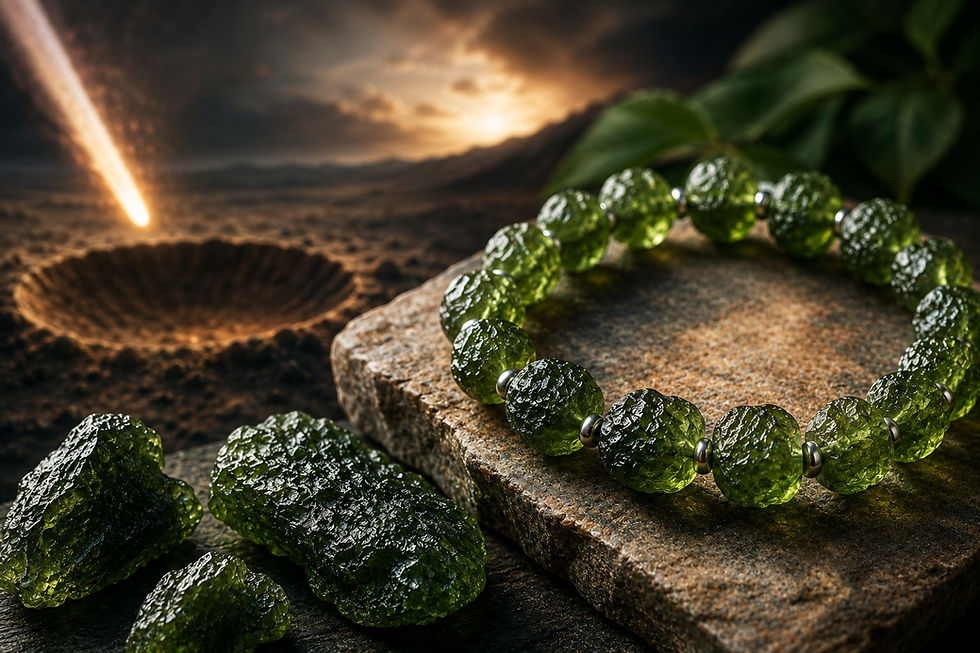
The moldavite strewn field is defined as the geographical area where Moldavite fragments landed after the Ries crater meteorite impact approximately 14.8 million years ago. Scientists use the term “strewn field” to describe regions where impact debris scattered after a cosmic collision.
When the asteroid struck near present-day Germany, the explosion blasted molten terrestrial material high into the atmosphere. That material cooled during flight and eventually fell across sections of Central Europe, especially within the Czech Republic.
The Moldavite strewn field mainly covers:
South Bohemia
Moravia
smaller nearby regions
This distribution pattern explains why authentic Moldavite remains so geographically limited.
Many online articles simply state that Moldavite comes from the Czech Republic without explaining why only specific regions contain collector-grade material. The reality is more complex. Wind patterns, atmospheric cooling, and ejecta velocity influenced where the molten fragments landed millions of years ago. The field itself does not produce identical Moldavite everywhere. Different localities create different textures, shapes, and collector qualities. This is why locality names such as Besednice and Chlum carry strong importance in the collector market.
In my experience reviewing Moldavite collections, locality often matters as much as specimen size. Advanced collectors frequently prioritize geological origin before evaluating weight. Understanding the strewn field provides the foundation for identifying authentic Moldavite and appreciating why genuine Czech material remains so rare today.

Where Moldavite Is Found in the Czech Republic
The answer to where moldavite is found centers mainly on the Czech Republic, particularly South Bohemia and Moravia. These regions received the highest concentration of impact ejecta after the Ries crater collision. The Moldavite Czech Republic deposits became globally famous because they produce the majority of collector-grade Moldavite available today. Most genuine Moldavite sold internationally originates from these Czech localities.
The primary Moldavite regions include:
South Bohemia
Moravia
Besednice area
Chlum region
Slavce locality
Nesmen deposits
Each region creates slightly different visual characteristics. Some localities produce smoother elongated pieces while others create deeply sculpted textures with dramatic surface formations.
South Bohemia remains especially important because many legendary collector specimens originated there. Besednice, for example, produces highly textured “hedgehog” Moldavite that advanced collectors actively pursue. A common mistake I see among first-time buyers is assuming Moldavite can be mined anywhere in Europe. Genuine collector-grade material comes from a very restricted geographical zone connected directly to the ancient impact event.
Modern geological mapping and excavation studies continue refining knowledge of the Moldavite distribution pattern. In 2026, collectors increasingly value locality transparency because counterfeit Moldavite products continue growing online. The Czech origin matters not only scientifically but also economically because locality now influences rarity and collector pricing significantly.
The Most Important Moldavite Localities
The term moldavite locality guide refers to the study of individual Moldavite-producing regions and how each locality influences texture, shape, rarity, and collector value.
Several Czech localities dominate the collector market because of their distinctive visual character.
Besednice
Besednice Moldavite is famous for dramatic “hedgehog” texture. The deeply etched sculpting gives these specimens strong collector appeal and premium
market value.
Chlum
Chlum Moldavite often appears smoother and more elongated. Collectors appreciate the elegant forms and balanced surface detail.
Slavce
Slavce material usually displays softer texture patterns with natural flow characteristics. Many jewelry designers prefer these pieces for wearable designs.
Nesmen
Nesmen Moldavite sometimes shows unique rounded forms and transparent green coloration. Collectors value clean preservation and natural symmetry.
South Bohemia
South Bohemian deposits remain central to the Moldavite collector market because they produced many historically important specimens. Each locality reflects different cooling conditions, environmental erosion, and geological preservation over millions of years.
A useful analogy compares Moldavite localities to famous wine regions. The same overall process created them, but environmental conditions shaped distinct final characteristics. Many competing articles fail to explain how much locality affects collector behavior. Advanced buyers rarely purchase Moldavite based on color alone.
They evaluate:
locality
texture
rarity
preservation
provenance
That locality-driven market continues growing as collector education improves worldwide.
Why Moldavite Exists Only in Certain Regions
The question of why Moldavite exists only in certain regions has a direct geological explanation. Moldavite formed under extremely specific impact conditions that occurred only once in Central Europe.
The Ries crater meteorite impact generated enormous heat and pressure. Molten terrestrial material launched into the atmosphere before cooling into natural green tektite glass. However, only certain flight paths allowed the ejecta to land in concentrated areas suitable for preservation.
Several factors controlled distribution:
explosion angle
atmospheric drag
ejecta velocity
cooling rate
landscape conditions
The result created a limited Moldavite strewn field rather than worldwide distribution.
Unlike minerals formed continuously through volcanic or tectonic activity, Moldavite originated from a single ancient impact event. This uniqueness explains its rarity today. According to geological studies examining Central European tektites, the Ries crater event remains one of the clearest documented links between a known meteorite impact and a verified strewn field.
A common misconception suggests Moldavite can still form naturally today. That is incorrect. Genuine Moldavite formed approximately 14.8 million years ago and cannot regenerate through modern geological processes. This finite origin explains why collector demand keeps rising while authentic supply continues shrinking. The rarity becomes even more important when examining how locality affects texture and value.
How Locality Affects Moldavite Texture and Value
The appearance and value of Moldavite change significantly depending on locality. Environmental conditions during cooling and long-term erosion created unique regional differences across the Czech strewn field.
Some localities produce:
deeper etching
sharper grooves
elongated shapes
smoother surfaces
stronger transparency
Besednice remains famous for aggressive sculpting, while Chlum often produces cleaner flowing forms. Collectors usually prioritize texture because natural surface detail reveals authenticity and geological character. Highly sculpted pieces often command stronger prices than smoother commercial-grade material.
One real-world example demonstrates this clearly. Two Moldavite specimens of equal weight may sell for dramatically different prices depending on locality and texture depth. A heavily etched Besednice piece often attracts advanced collectors immediately because visually complex textures remain harder to source. In my experience working with collectors, premium locality pieces sell faster because educated buyers recognize their rarity quickly.
The collector market in 2026 increasingly values:
locality transparency
natural texture
provenance documentation
authenticity verification
geological individuality
Many fake Moldavite products imitate color successfully but fail to replicate authentic locality texture convincingly.
This growing awareness has shifted the market away from generic green glass and toward verified Czech collector specimens. That shift also explains why authentic Moldavite is becoming increasingly difficult to source.
Why Authentic Czech Moldavite Is Becoming Rare
Authentic Czech Moldavite becomes rarer every year because the material is finite. Mining areas continue shrinking while collector demand grows globally.
Several factors contribute to scarcity:
depleted deposits
excavation restrictions
counterfeit market growth
rising collector interest
luxury jewelry demand
The moldavite czech republic market changed dramatically over the last decade. Earlier buyers often focused mainly on spiritual interest. Modern collectors now prioritize:
locality
rarity
geology
texture
investment quality
This evolution increased competition for premium specimens.
A common mistake I see among new buyers is assuming large quantities of Moldavite still remain undiscovered. Most accessible historical deposits have already been heavily mined. Social media also accelerated demand. Viral videos and collector photography introduced Moldavite to wider audiences worldwide. Unfortunately, counterfeit production increased at the same time.
Trusted sourcing now matters more than ever. Brands like Rare Moldavites focus on verified Czech Moldavite because authenticity concerns continue growing among serious collectors. As geological awareness expands in 2026, educated buyers increasingly prefer well-documented locality specimens over uncertain commercial material. Understanding how collectors verify origin becomes essential for anyone entering the Moldavite market today.
How Collectors Verify Moldavite Origin
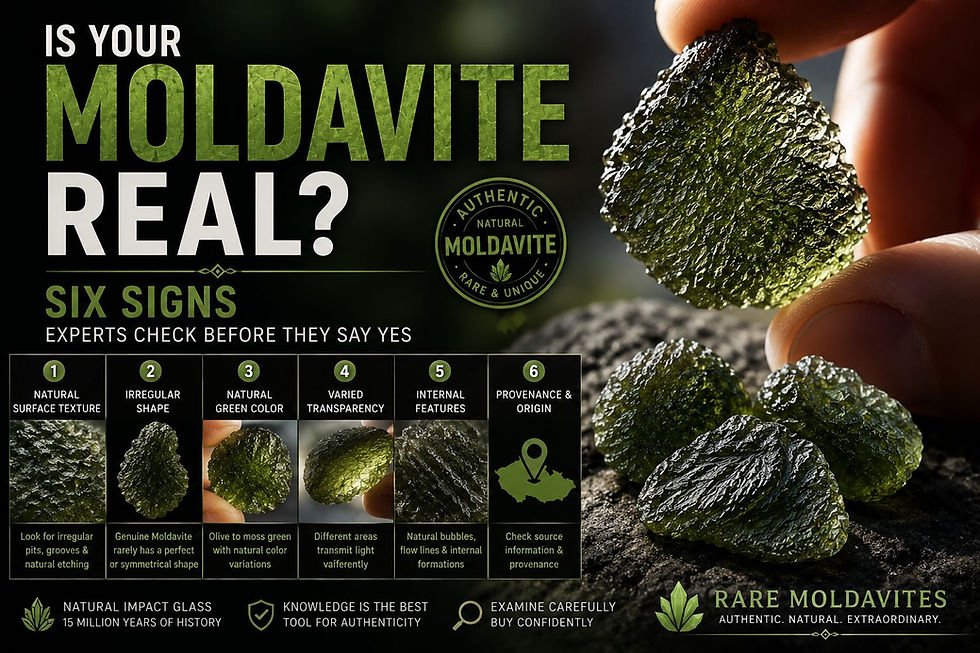
Collectors use several methods to verify genuine Moldavite origin and avoid fake products.
Examine Texture
Authentic Moldavite displays natural etching and irregular sculpting. Manufactured glass often appears overly smooth or repetitive.
Check Locality Information
Trusted sellers usually identify Czech localities such as Besednice, Chlum, or Slavce clearly.
Analyze Internal Features
Real Moldavite contains:
flow lines
bubbles
natural inclusions
uneven internal structure
Review Provenance
Serious collectors prefer documented sourcing from reputable Moldavite specialists.
Compare Lighting Reflection
Natural Moldavite reflects light unevenly because of complex texture. Artificial replicas often show flat glossy surfaces.
One analogy compares Moldavite authentication to evaluating natural emeralds or meteorites. Tiny imperfections become evidence of authenticity rather than flaws. A common problem today involves fake Moldavite sold through social media marketplaces with unrealistic pricing and vague origin claims. Genuine locality information provides one of the strongest indicators of legitimacy. As collector knowledge improves, transparency and geological education continue becoming central parts of the premium Moldavite market.
According to the Geological Survey of the Czech Republic and studies examining the Ries crater impact ejecta field, Moldavite deposits formed after molten terrestrial material traveled hundreds of kilometers through the atmosphere before landing across South Bohemia and Moravia. Researchers identified these Czech regions as the primary source of authentic collector-grade Moldavite found on the global market today.
Frequently Asked Questions
Where is genuine Moldavite found naturally?
Genuine Moldavite is found mainly in the Czech Republic within South Bohemia and Moravia. These regions belong to the Moldavite strewn field created by the Ries crater meteorite impact around 14.8 million years ago. Famous localities include Besednice, Chlum, Slavce, and Nesmen. Collector-grade Moldavite comes primarily from these restricted Czech regions rather than widespread global deposits.
Why is Moldavite only found in the Czech Republic?
Moldavite is found mainly in the Czech Republic because the ancient meteorite impact scattered molten ejecta into this specific geographical zone. Atmospheric conditions and ejecta trajectory concentrated the material across South Bohemia and Moravia. Geological preservation within these areas also protected the fragments for millions of years. This limited distribution makes authentic Moldavite extremely rare compared to common minerals.
What is the Moldavite strewn field?
The moldavite strewn field is the geographical region where Moldavite fragments landed after the Ries crater impact event. Scientists use the term “strewn field” to describe areas where impact debris scattered following a meteorite collision. The Moldavite strewn field mainly covers sections of the Czech Republic and contains the world’s most important Moldavite localities. These regions continue supplying collector-grade specimens today.
What is the best way to identify authentic Czech Moldavite?
The best way to identify authentic Czech Moldavite is by examining texture, locality information, internal structure, and seller transparency together. Genuine Moldavite usually contains natural etching, flow lines, and irregular surface sculpting formed through geological processes. Trusted dealers also provide clear Czech origin details. Fake Moldavite often appears too smooth or artificially polished under close inspection.
Which Moldavite locality is most valuable for collectors?
Besednice Moldavite remains one of the most valuable localities because of its dramatic hedgehog texture and strong collector demand. Highly sculpted Besednice pieces often command premium prices compared to smoother Moldavite from other regions. However, rarity, preservation, and overall visual quality also influence value heavily. Advanced collectors usually prioritize texture and provenance over size alone.
Can Moldavite still be discovered in new locations?
Large new Moldavite discoveries remain extremely rare because most known deposits have already been studied and heavily mined. Genuine Moldavite formed during a single ancient impact event rather than continuous geological activity. Small finds occasionally occur within the existing strewn field, but entirely new major regions are highly unlikely. This limited supply contributes to increasing collector demand worldwide.
Is Moldavite worth collecting in 2026?
Yes, Moldavite remains highly collectible in 2026 because authentic Czech specimens continue becoming rarer while global interest grows. Collectors value Moldavite for its geological origin, natural texture, and historical connection to a meteorite impact event. Locality-specific pieces now attract strong premium demand in the collector market. Educated buyers increasingly seek verified Czech specimens with documented provenance and natural character.
CONCLUSION
Understanding where is moldavite found reveals why this rare green tektite remains one of the world’s most fascinating collector stones. The Czech Moldavite strewn field connects directly to a meteorite impact that occurred millions of years ago, creating unique localities with distinct textures and geological character.
From Besednice hedgehog formations to elegant Chlum specimens, each region tells part of Moldavite’s cosmic story. Learning locality differences and authenticity markers helps collectors make informed decisions while avoiding imitation material.

Comments